
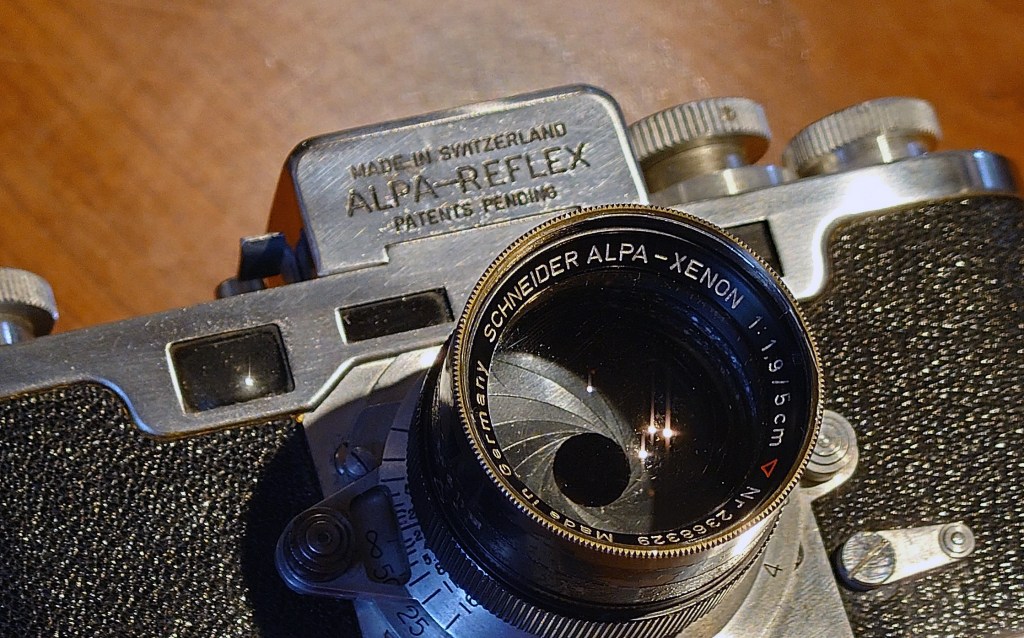
Everyone who has an interest in photography has heard of Nikon and Canon, that said anyone who doesn’t have an interest in photography has probably heard of Nikon or Canon and probably Pentax as well. The vast majority of photographers will also have heard of Leica, and quite a few know of Contax, even if they don’t know of Zeiss Ikon who were Leica’s only real rival for many years. Not many at all have heard of Alpa unless they are real enthusiasts. I say this as Alpa during the years they manufactured cameras, which technically was from 1944 to 1989, produced about 38,500 cameras in total across all model denominations. To draw a comparison with what must be the most collected camera, Leica produced circa 131,000 IIIc cameras from 1940 to 1951 and circa 184,000 IIIf cameras from 1950 to 1956. In all, about 540,000 model III camera across all variants were produced. If we were to add in the original Leica model I and II we can add a further 120,000 cameras to that total just for the screw mount models. So Alpa cameras are quite rare in comparison to the esteemed Leica, some Alpa models have just a single digit production run or double digits at best. Alpa could never compete at the level of Leitz or Zeiss, nor did they try, they aimed at being the high end bespoke camera for the photographic connoisseur.
Alpa cameras definitely have a unique appeal and are often far from the easiest to use. In addition, just like a high end Swiss watch they were built entirely by hand, and often only to order. These were not mass produced cameras by any stretch of the imagination, often just a few cameras a month were made, and I say cameras as Alpa did not manufacture lenses. These were sourced from the most prestigious optical houses of the time such as Angenieux, Kinoptic, Kern, and Schneider Kreuznach to name the main suppliers, along with Old Delft for early camera models. Some of the lenses made by these manufacturers were outstanding for the time and deservedly have their place in the pantheon of photographic optical history.
https://www.angenieux.com/about-us/history
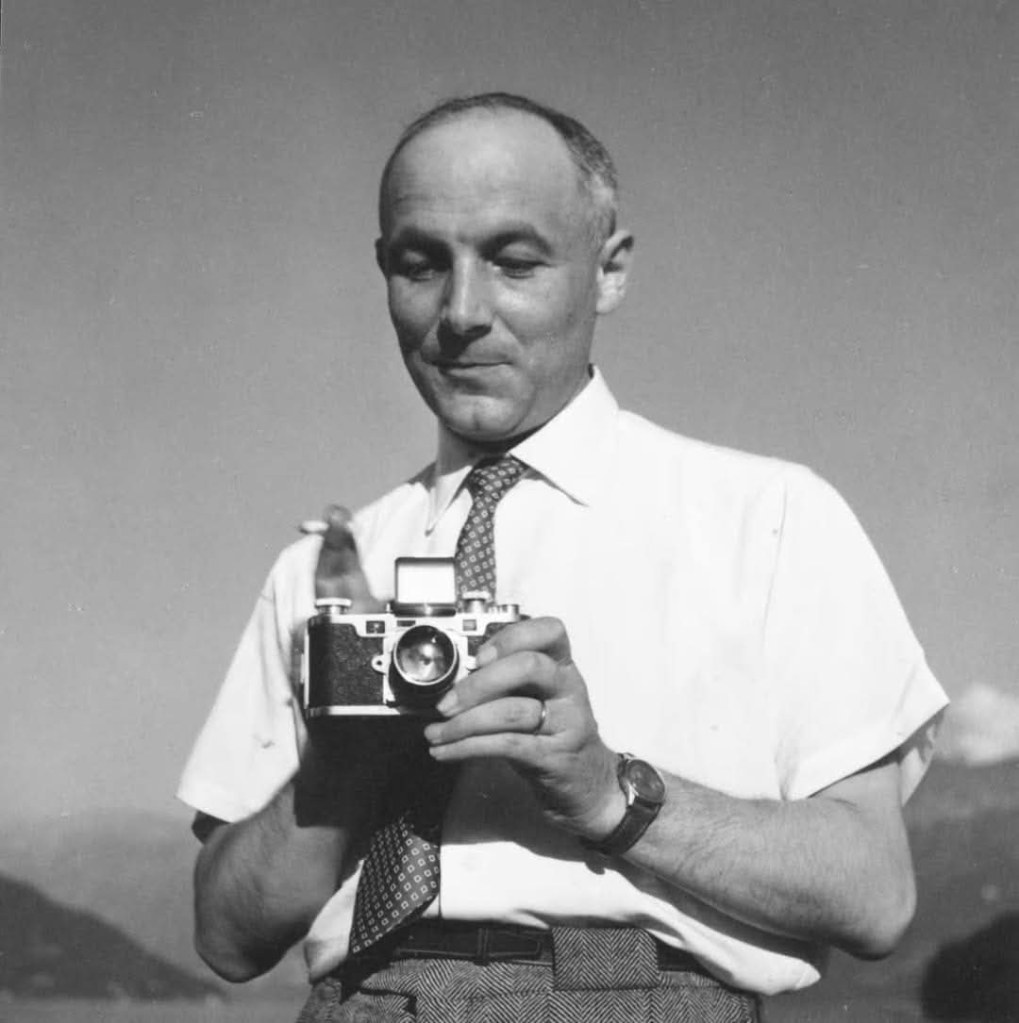
Pierre Angenieux, July 14, 1907 – June 26, 1998 was born in Saint-Heand, France, was a French engineer and optician.
Angenieux right from the very beginning to the very end was one of the main suppliers of lenses for Alpa cameras. The above website is a fascinating read on the companies history and the lenses they have produced.
Here in this image, Pierre Angenieux is pictured using an early Alpa Reflex.
So what is special about an Alpa if you have never heard of or seen one before. What is the history, and are they worth the bother. Yes you read that right. Some big questions which I aim to cover over five articles beginning with the first series and ending with the Alpa that isn’t really an Alpa.
From keeping time to capturing a moment
Starting almost at the end of the story, Alpa as a company went into insolvency and closed as a company in 1990 and along the way the archives seem to have disappeared. There are records that have been transcribed into a list of known serial numbers but some of the records are missing and Pignons was not the best when it came to maintaining such records in the first place. There is a fair amount of information gleaned from various sources but it seems to be piece meal and not a full documented history like that of Leica. The main source of information tends to come from two publications ‘Alpa Complete Collectors Guide’ and The Alpa Production Index. Indeed one of the caveats of the index is that the files held in the archives of the Canton Vaud in Switzerland are incomplete with documents often not registered or lost. It is also noted that as camera models came back to the factory for service or repair they were often upgraded to the specification of a later model. Tracing the roots of an Alpa camera is not easy and the few authorative books that have been written seem to be harder to come by than the cameras themselves, and also attract a high price. The narrative within them also seems to be at variation at times due to the lack of official records for corroboration. The information that follows is gleaned from forums, enthusiasts, collectors the internet in general and the two publications mentioned earlier. I therefore personally would not vouch for its veracity 100%. However production numbers seem to be accurate-ish even if serial numbers seem to have been confused at times within the factory. It is also worth noting that such things as a repair manual is a bit like unicorn poo, and so far I have never seen one let alone heard of one in existence. Alpa’s in general, if requiring a service or repair went back to Switzerland or one of a few agents located outside Europe. Sadly there are now very few reputable repair technicians with spare parts able to service these cameras and I am sure the cost would be comensurate with their scarcity. Exploded diagrams of the later series of Alpa’s are easy to come by which give a good indication of what to expect when dismantling a camera, but this should not be undertaken lightly for very obvious reasons.
So where did it all start. In a single word ‘Switzerland’ the home of precision watchmaking and with a company called Pignons SA, located in the Jura mountain foothills in a town called Ballaigues. Initially a supplier of precision watch parts such as gear wheels to the Swiss watch making industry, they looked to expand their expertise of ultra precise mechanical timing excellence into the closely related world of camera manufacture, and escape the clutches of post war depression. In order to accomplish this they employed Jaques Bolsky, born Yakob Bogopolsky on 31st December 1895 in Kiev, who had a number of camera inventions to his name, not least the famous Bolex cine camera. Through this employment transaction in 1939 Pignons also bought the rights to a camera he had designed which would form the future Alpa Reflex. During 1939 and soon after Pignons built a small number of prototypes with the name Bolca, Teleflex and Viteflex, these are rare, very rare. Apparently only about about 30 cameras were made and if found in good order fetch a substantial sum of money, that said, they also tend to fetch good money when not working and in a poor state too. These are known as series A model cameras. Soon after in 1941 Jaques Bolsky left Pignons to emigrate to America and escape the oncoming horrors of the Second World War, which promptly interrupted and delayed further design refinements and sales. Alpa as a name was not conferred to the camera until 1942, and it was debuted to the photographic public at the Swiss Trade fair, Basal in April 1944. Alpa as an actual company was not formed and registered until 1946.
https://www.bogopolsky.com/wp/yacov-
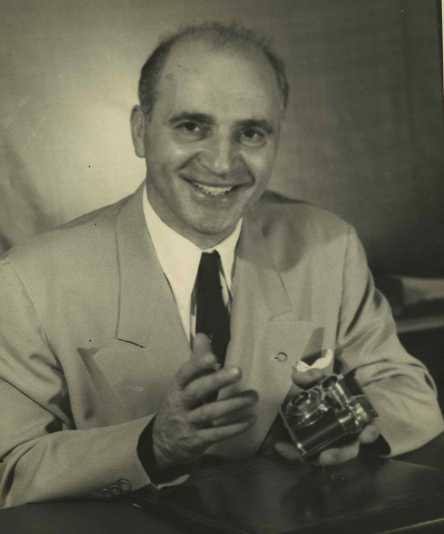
Jacques Bolsey, né Yacov Bogopolsky (December 17, 1895–January 21,1962) was born in Kiev (or Zlatopol), Russia, and raised in Astrakhan, eldest of five children in a highly educated family. As a child and young adult, he was already a talented painter, sculptor, and photographer.
The above website is authorative on the history of the Bogopolsky family and is interesting reading about the family in its own right during the dreadful times of the early 20th century.
Alpa Reflex
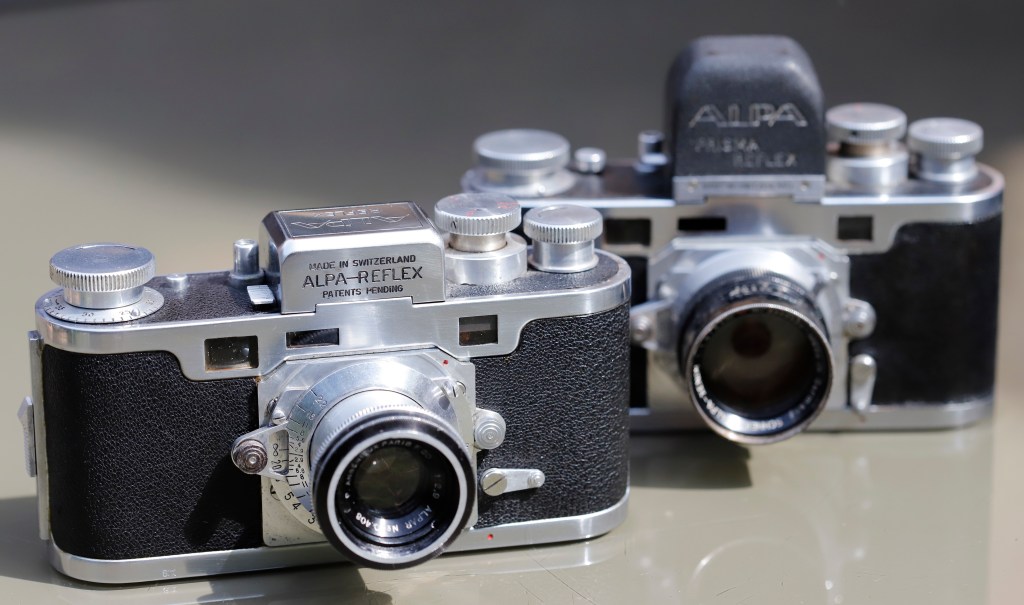
Series B soon followed and some 600 cameras being produced for sale locally. This very early Alpa model can be referred to as type or model I by the fact that the rangefinder following lever is situated at the top of the lens mount. Proper serial production of the Alpa Reflex started in 1944 with Series C with a reputed 571 cameras being built. The model II series D was then introduced during 1944 and seemed to be vastly improved…the rangefinder follower is now at the base of the lens mount, two big screws at the base of the lens mount escutcheon were dismissed and replaced by a forth screw to the lower right of the lens mount, and the lens release button is now raised in steps rather than smooth and polished.
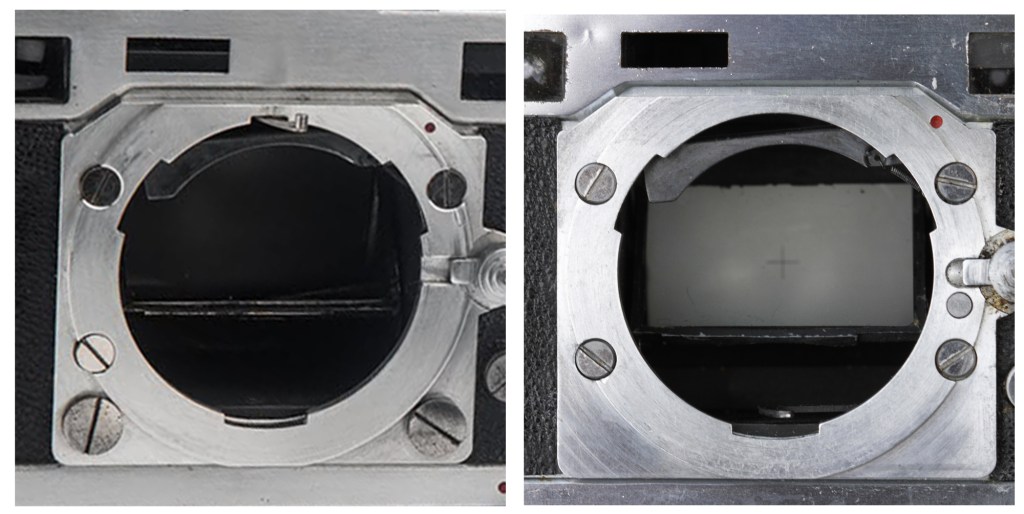
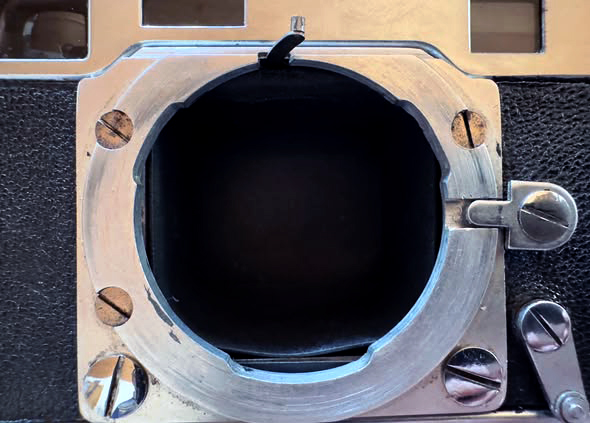
Production of the model II lasted until 1952. It is at this early stage we have to start looking at the difference in features and finish that differentiate the rarity of the various models within each series. Again gleaning the internet and published references a total of 4570 cameras were produced. Out of these 519 incorporated a two pin flash sync system, and 53 were produced with a special blue or brown lizard skin covering. The little Alpa weighs in at 503g body only on my scales without a lens, and measures 140mm wide by 62mm high to the top plate, 79mm high to the top of the folded waist level finder or 98mm when opened, the depth is a mere 39.5mm.
These early Alpas were notable in being both a reflex SLR and a rangefinder combined in the same body, the reflex viewing being accomplished via a waist level finder, not a prism. They also had their own proprietary three claw bayonet mount with a very small register allowing adapters to be used to mount other lenses. I have an off brand adapter allowing the use of M42 lenses on these early models. A cautionary note is that the very early pre production versions of the camera noted as series A, and production cameras sold only in Switzerland as series B, used a bayonet mount that is not the same as with later models from version C onwards. Therefore earlier lenses could not be mounted to later series cameras, but Pignons did offer a retro fitting of the new mount to alleviate this issue. If version C marked the change in bayonet mount, version D marked a change in the rangefinder coupling making it more robust by moving the follower to the base of the lens mount. Series D cameras can be considered the start of model II and worldwide distribution. Finally version E summoned in the Alpa Prisma Reflex and also two pin flash synchronisation. With all that said there are a number of cameras coming to light that do not follow the above improvements in chronological order…typical Alpa.
Interestingly a recent post on an Alpa Facebook forum showed a Viteflex, which is a pre Alpa production prototype without said large screws to the bottom of the lens mount escutcheon. Without knowing otherwise it can only be assumed that the camera had the mount upgraded at some point in time? But who knows, these are all hand built cameras that no doubt underwent various non documented alterations throughout their life during service and repair. A good guide to the series production is listed in the table below, bear in mind it is a guide and not definitive
| Model name/version | Year manufactured | Number manufactured |
| Series A, Bolca 1, Teleflex, Viteflex | 1939 – 1941 | 30 |
| Series B, Alpa Reflex | 1942 – 1944 | 600 |
| Series C, Alpa Reflex | 1944 – 1946 | 571 |
| Series C, Alpa Reflex de luxe | 1944 – 1946 | 30 |
| Series D, Alpa Reflex | 1944 – 1946 | 1408 |
| Series D, Alpa Reflex de luxe blue or lizard skin covering | 1945 – 1947 | 18 |
| Series D, Bolsey Reflex | 1945 – 1947 | 252 |
| Series E, Alpa Reflex | 1947 – 1951 | 2643 |
| Series E, Bolsey Reflex | 1947 – 1951 | 71 |
| Series E, Alpa Reflex synchronised | 1947 – 1951 | 519 |
| Series E, Alpa Reflex de luxe blue or lizard skin covering | 1946 – 1952 | 5 |
| Series C, Alpa Reflex Standard without long shutter speeds | 1944 – 1945 | 8 |
| Series D, Alpa Reflex Standard with long shutter speeds | 1945 – 1947 | 265 |
| Series D, Alpa Reflex Standard without long shutter speeds | 1945 – 1947 | 29 |
| Series C, Alpa reflex Standard with long shutter speeds | 1944 – 1945 | 92 |
| Series E, Alpa Reflex Standard with long shutter speeds | 1947 – 1951 | 60 |
| Series E, Alpa Reflex Standard with long shutter speeds and synchronised | 1947 – 1951 | 10 |
| Series E, Alpa Reflex Standard without long shutter speeds and synchronised | 1947 – 1951 | 2 |
| Series E, Alpa Prisma Reflex | 1947 – 1951 | 630 |
| Series E, Alpa Prisma Reflex synchronised | 1947 – 1951 | 305 |
Alpa Standard
From series C onwards, a few cameras were made omitting the reflex mirror and waist level finder completely, they only incorporated the rangefinder mechanism. These were named the Alpa Standard and 466 were produced in 1944 to 1951. Out of these 39 were made without slow shutter speeds 12 with two pin flash sync and 2 of those were made with no slow shutter speeds. I have a standard currently undergoing total restoration that does not have slow shutter speeds and sports two pin flash, it is one of only 2 ever made with serial number 25,050. The other bears a serial number of 120,246 and hopefully is out there, somewhere?
Bolsey Reflex
As a slight diversion in production and naming convention, during the period of 1946 to 1948 the American importer and distributer for Alpa, Karl Heitz, had 323 cameras made under the name Bolsey Reflex, reputedly without two pin flash sync. However some have come to light with said synchronisation added at some point, possibly at the request of the owner? Alpa were always ready to adapt the camera to the users specific needs, that was their forte after all.
Alpa Prisma Reflex
With the introduction of series E, Alpa were amongst the first of a new breed of cameras to incorporate reflex viewing through a prism. The first being the Italian Rectaflex of 1948 closely followed by the Zeiss Ikon Contax S of 1949. Curiously the Alpa Production Index puts the Alpa Reflex in production as of 1947 pre dating both the Rectaflex and Contax S. The serial numbers relate to 4 cameras numbered 14340, 14341, 20425 and 20784 which are all said to be produced in 1947. This I think is a mistake in the transcribing of the records, and when if ever I go to Switzerland and the Canton Vaud, I would love to look over the archives to see what is said about this particular model. Indeed the Alpa Complete Collectors Guide puts the introduction of the Alpa Prisma Reflex as of 1949. However, only 935 were made and 305 had two pin flash sync. It weighed in at 569g body only without a lens. When it came to the prism Alpa naturally did things differently and used a prism which gave a 450 viewing angle rather that the 900 normally seen on 35mm cameras. This was an Alpa feature that was to remain for quite some time right up until the 2nd generation model 6c (third generation?…more on this later) and fully dropped with the advent of the 3rd generation 9d.
Construction
These early cameras are quite unique in their construction methods as they are fabricated entirely from sheet steel, there are no cast assemblies at all. The main outer body is made from pressed and formed sheet steel which is then bright chromed. An inner casing is also made from sheet steel of a thinner gauge painted matt black, and the internal chassis and mirror box is made from plate brass held together by angle brackets…I kid you not. If you are ever going to work on one of these cameras you are in for quite an experience.
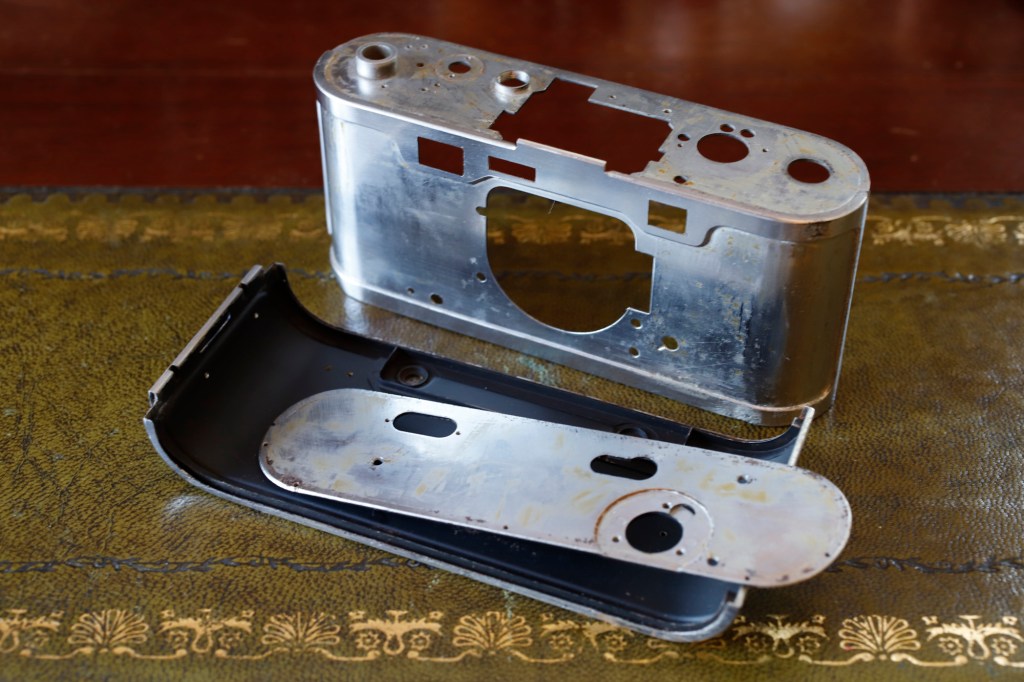
The above image shows the external chromed steel outer body of my Alpa Standard as it is prepared for total restoration. The camera had been kept in a hot and humid environment and needs completely rebuilding. The top plate is fixed as part of the external camera body front, whereas the bottom plate is held in place by screws. The rear body casing is fully detachable. By removing the bottom plate access to the running gear is provided and general lubrication and adjustment can be performed. If more work is required then the whole process starts to get very complicated quite quickly. Repair of this camera is not for the feint hearted.
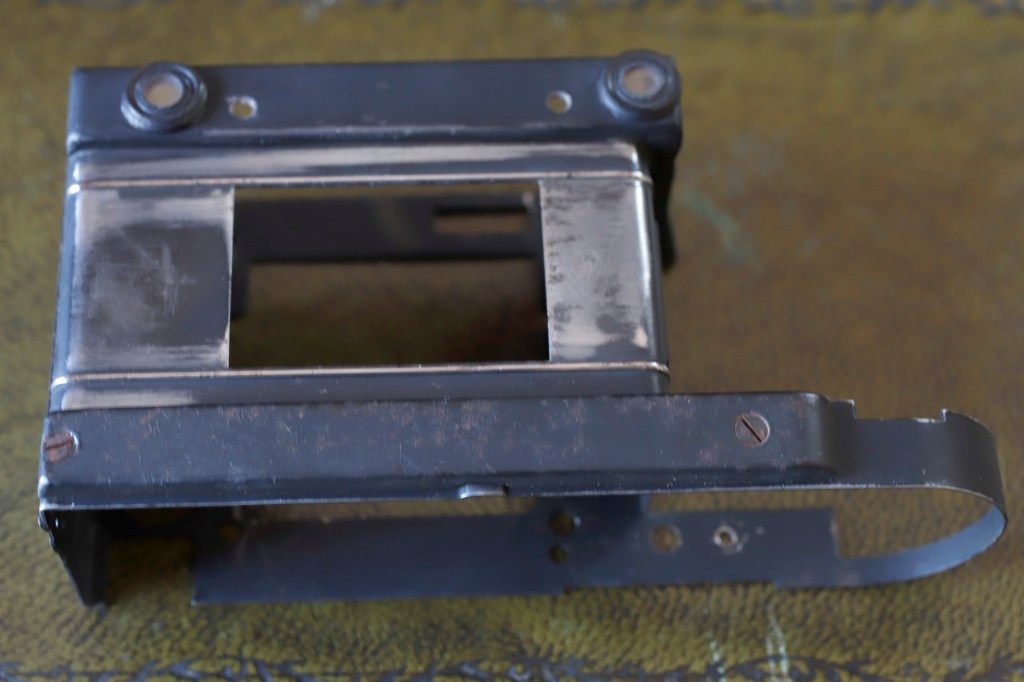
Sitting inside the outer body and secured by screws is this inner, and thinner gauge pressed sheet steel casing. In this instance it is being slowly cleaned of rust and corrosion prior to being repainted. The long plate at the bottom is removable and held in place by the two screws shown. This allows additional access to the bottom shutter rollers.
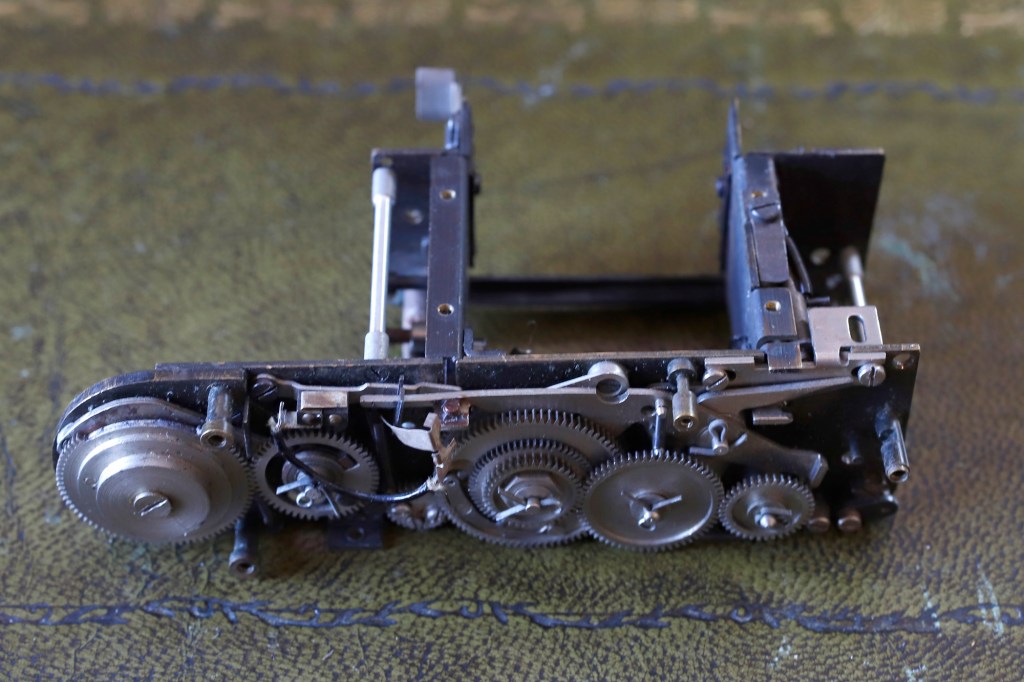
Sitting inside the inner pressed steel chassis sits the heart and soul of the camera. We now have the beautifully executed and arranged mechanical clockwork all held in place by split pins, and full access to the shutter curtains and mirror box if fitted. To get this far requires quite a large amount of other sub assemblies to be removed such as the rangefinder and its mirrors. Not least the fact that this brass plate assembly is also cemented to the inner steel chassis, making it even more awkward to remove. Unfortunately there is no other way to get to the shutter curtains for their replacement. If it is just a general clean and lubrication of the running gears etc, then normally all that needs to be removed is the outer bottom plate as shown earlier. Luckily for me these all seem to be in good condition so it will just be new shutter curtains and rangefinder mirrors.
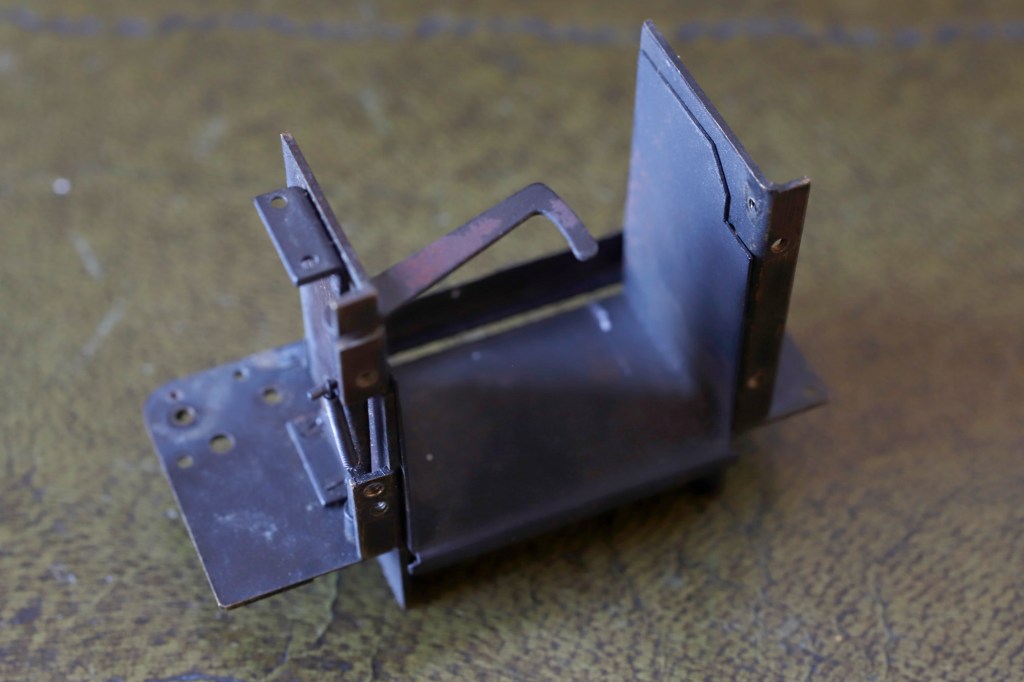
In the above image you will notice the rangefinder follower that connects to the rear of the lens and also an example of the angle brackets used to form this section that would normally house the reflex mirror. In this instance there is no mirror as this is a Standard model. It should be noted though that the module is upside down for ease of showing construction, the rangefinder follower sits at the bottom of the camera mirror box when installed for this series E model.
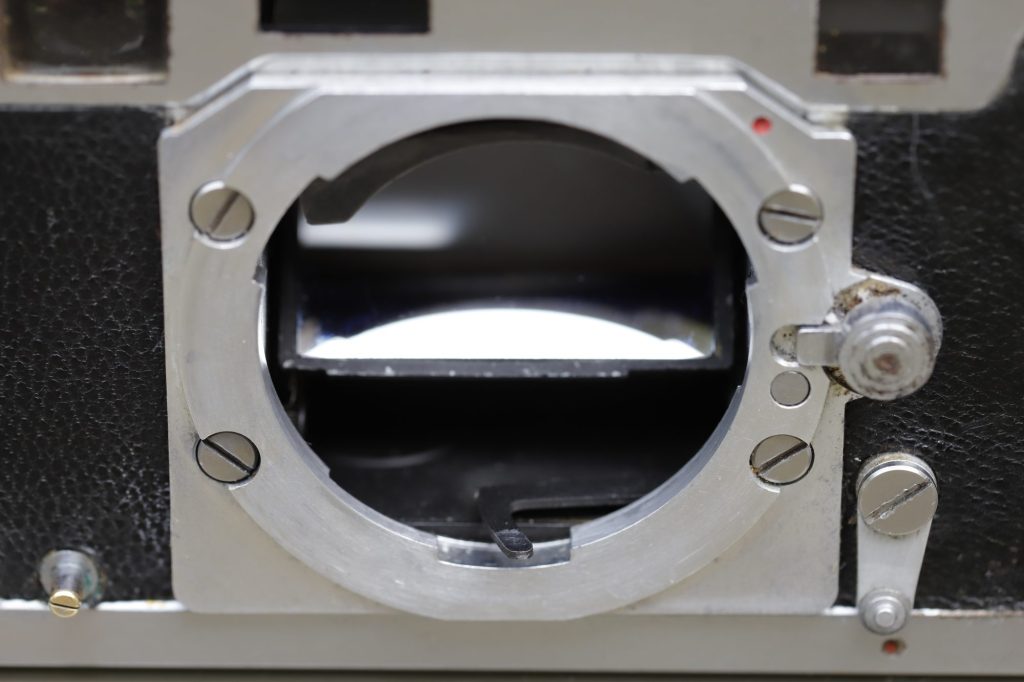
In the above image you can clearly see the rangefinder follower at the inside bottom of the lens mount. As stated before earlier cameras had the rangefinder follower at the inside top which no doubt would have complicated construction with the reflex mirror, it also cast a shadow on the reflex focussing screen which was distracting.
Using an early Alpa Relex
If you are going to use one of these cameras there are a few obvious caveats.
- You need a fully working camera which is often hard to find in a proper fully working condition.
- If it fails, be prepared for an expensive repair if you can find someone to do it.
- Finding anything other than a standard lens can be a lifetime occupation.
With that in mind these are fun cameras to use as long as you realise that they were made at the dawn of the 35mm reflex camera, and their ergonomics are not that of latter cameras, especially from Japan. The viewfinders are tiny and the reflex viewing is dim to say the least but quite useable in good light.
Either the Alpa Reflex or the Prisma Reflex represent a good choice with the Prisma Reflex probably being more useable, but much rarer. The Standard is just too rare to come by unless you are lucky and the viewfinder/ rangefinder is in good order.
Getting to know how the camera works is not that straight forward if you have never lived around old film cameras, even then, Alpa do things differently.
The top plate
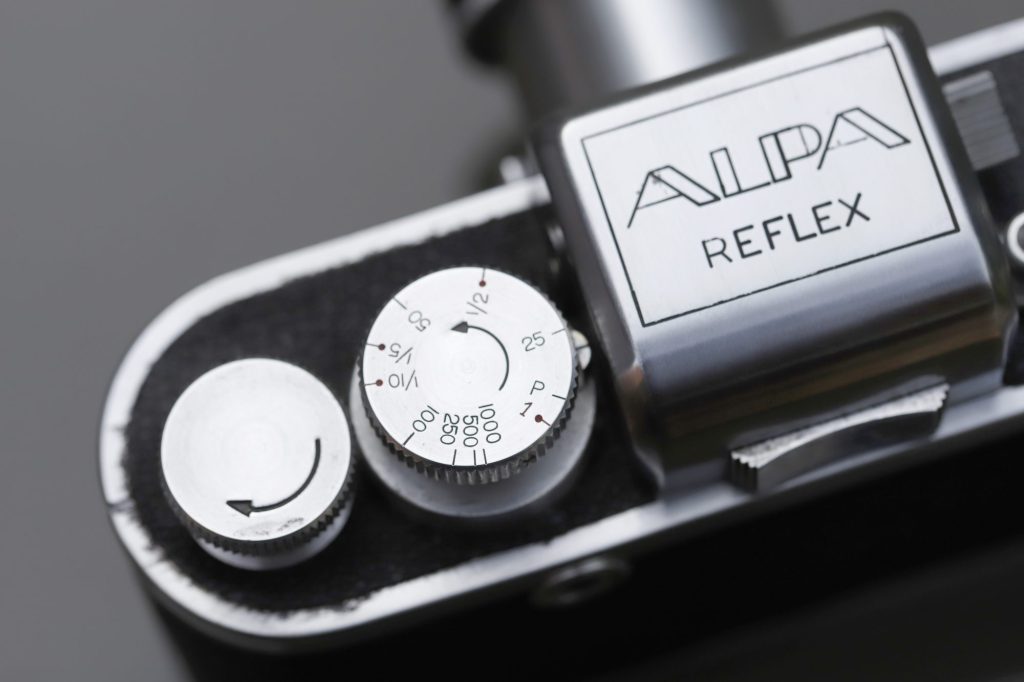
On the left of the reflex viewing hood you have the usual shutter speed dial. Not obvious in this image but slow speeds of 1/10th , 1/5th, 1/2 and 1 are engraved in red and higher speeds of 1/25th, 1/50th, 1/100th, 1/250th, 1/500th and 1/1000th are in black and the B setting is engraved as P. The only speeds in logical progression are the higher speeds of 1/100th through to 1/1000th all the others will require quite a bit of shutter dial manipulation to set quickly especially as you can only turn the dial in one direction. If you need to change the exposure time setting quickly, forget it. It is also interesting to note that the shutter speed dial does not rotate when the shutter is released. Further over is the rewind knob which raises against spring tension to enable easy film canister loading. The shutter itself is the normal for the time horizontally running cloth focal plane type.
- Caveat 1 – Shutter speeds can only be set by depressing and turning the dial anti clockwise (note the arrow) and only after winding on and tensioning the shutter, both of which are done at same time by the wind on knob.
- Caveat 2 – Slow speeds can only be accessed by engaging the slow speed escapement by the lever on the front of the camera which is not a self timer.
- Caveat 3 – The speed dial can be set at intermediate settings but doesn’t neccessarily give intermediate speeds, it’s best not to do it
- Caveat 4 – Ignoring any of the previous caveats and forcing levers and dials will result in a very expensive repair bill.
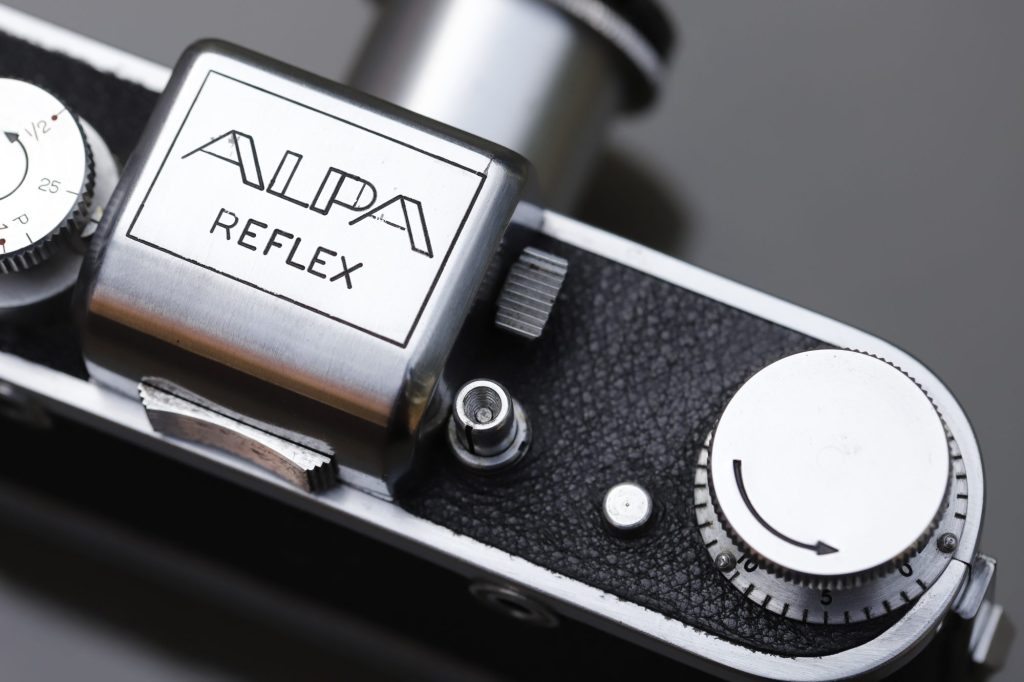
On the right of the top plate you have the wind on knob and underneath a manually set frame counter. It’s pretty much up to you what landmark you set it to as none is provided. I set mine to the joint between the front and rear of the camera. It counts up as you wind on. Next to it is a small chrome button for releasing the mechanism to rewind film, it stays depressed until the camera is tensioned and wound on. Next over is the release button threaded for a cable release if you wish to use one.
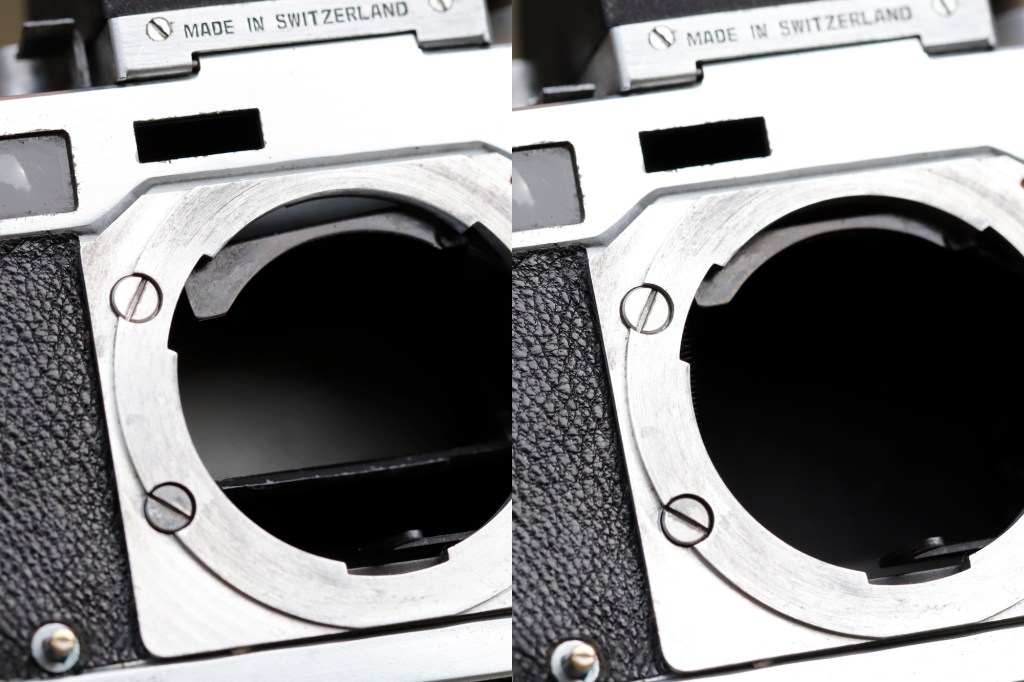
To the front of the top plate by the side of the reflex hood is a small grooved lever also seen at the very top left of the above images. It does not open the reflex hood but instead raises the reflex mirror. By pushing the lever down and forward it locks in place and raises the reflex mirror which in turn presses on and raises an internal baffle. This is situated just behind the lens mount and allows the standard lens to be retracted without causing damage to the reflex mirror. As can be seen in the above image the overall movement is not great but enough to prevent a lens being collapsed when attached or inserted accidentally when collapsed with the mirror down.
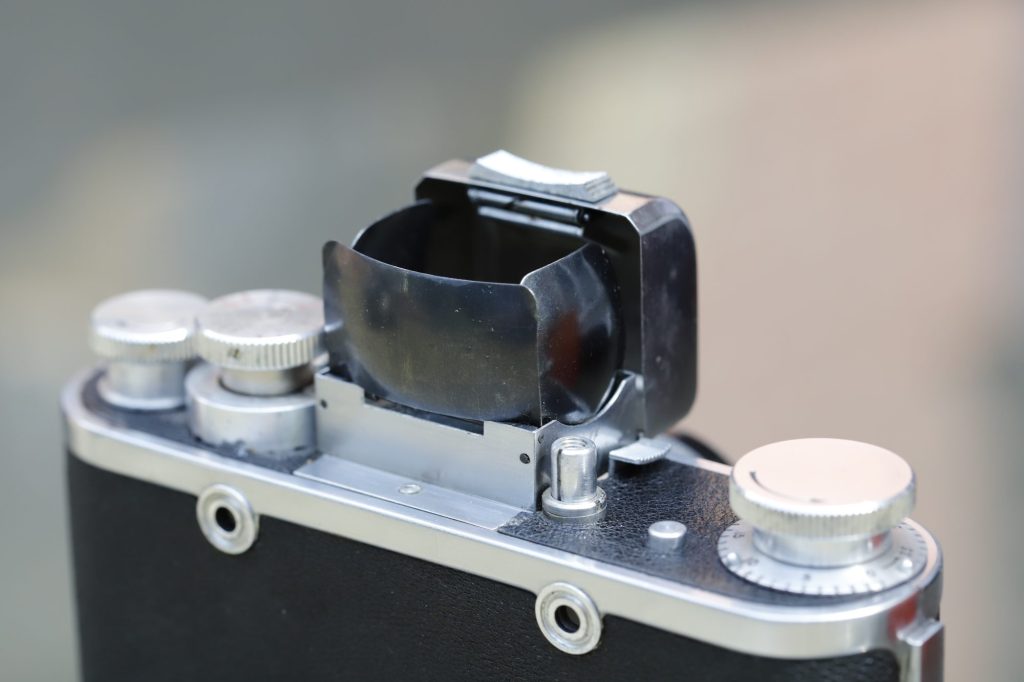
To raise the reflex hood you push up the scalloped bar at the rear of the hood. When open the same bar when pushed to the left raises the viewinder magnifier, and when pushed to the right, lowers it. No fishing around inside to push the magnifier back with your bare sweaty fingers here! From this angle the two infinitely small rangefinder and viewfinder port holes to peep through can clearly be seen. The rangefinder is on the left and the viewfinder is on the right. With the Alpa Reflex they are just plain small, on the Prisma Reflex the viewfinder peep hole is also in such a place that the overhanging prism block protrudes into your forehead as you squint to try and get some sort of an idea what you are trying to frame. The image below gives a better idea of the ergonomic problem.
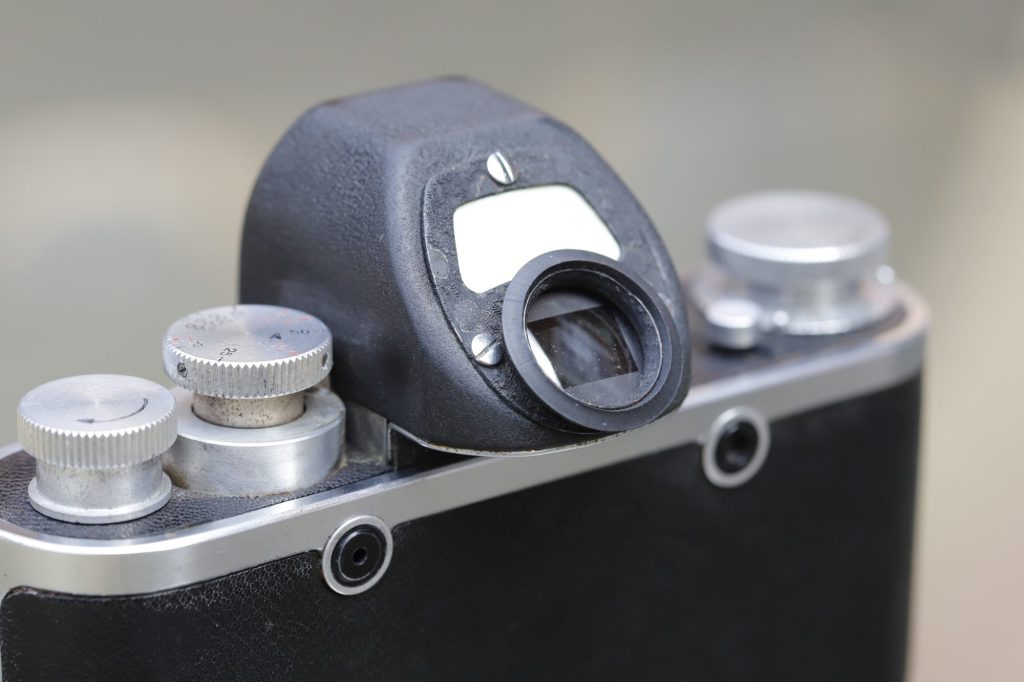
Alpa chose a 450 prism stating it was more useful, especially when the camera is on a tripod or copy stand…fair enough. However in general use it can cause a fair amount of frustration as you put the camera to your eye not to get a view of the scene you envisaged. You then either tilt your head down and get rewarded, or you tilt the camera up and get blinded by a view of the sky or worse still the sun. The white patch above is for you to write on and remind yourself what film you have loaded, ingenious?
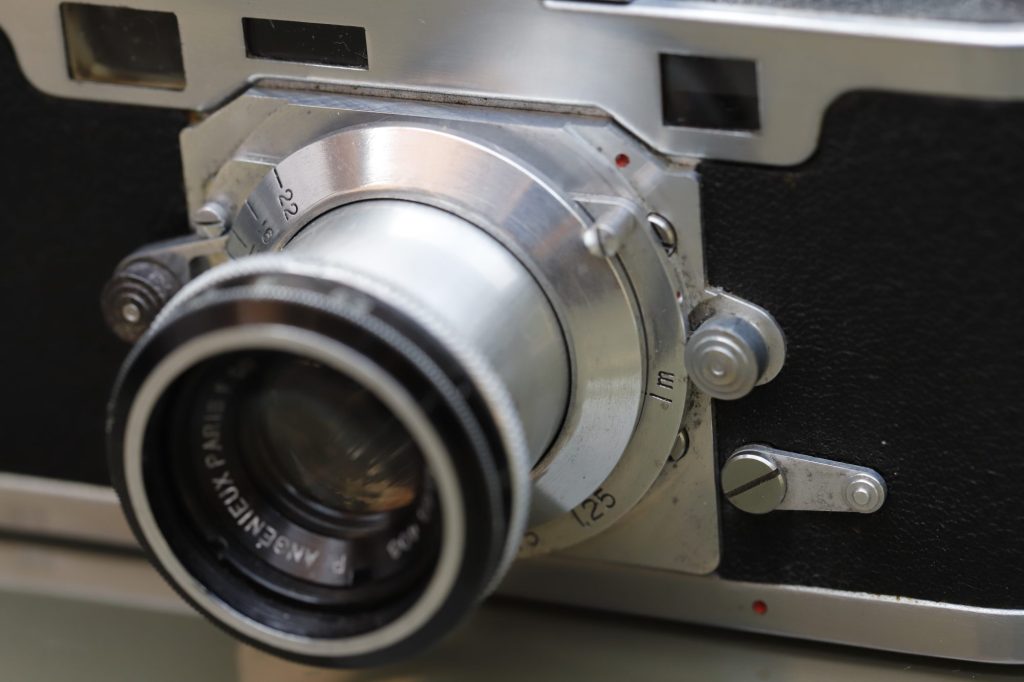
From the front there are the obvious viewfinder and rangefinder windows with the thin rectangular window giving the incident view for the rangefinder. To the side of the lens is the lens release button and below it the slow speed escapement setting lever which despite its looks is not a self timer.
- Caveat 1 – It can only be set at the 6 o’clock position for slow speeds when the camera is wound on and tensioned.
- Caveat 2 – When left set on the slow speed position and the shutter speed is set to 1/25th or above you will get varying odd speeds.
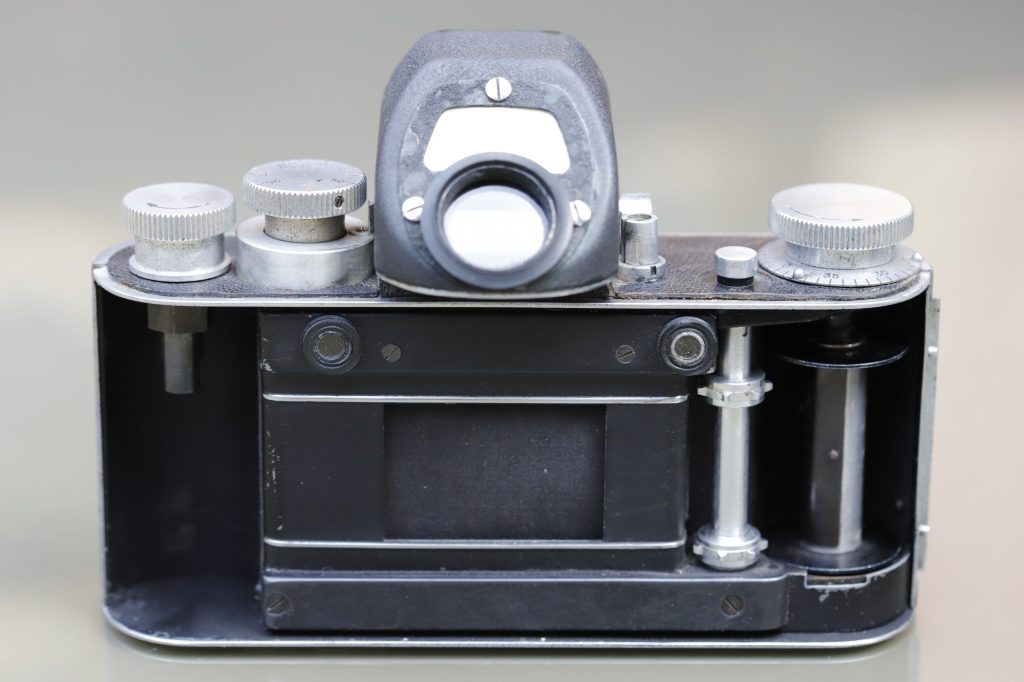
A rear view showing a fairly standard layout and thankfully in my example a fully working camera. Its far from mint or a museum piece but it works and can be used, and that is a massive bonus for me.
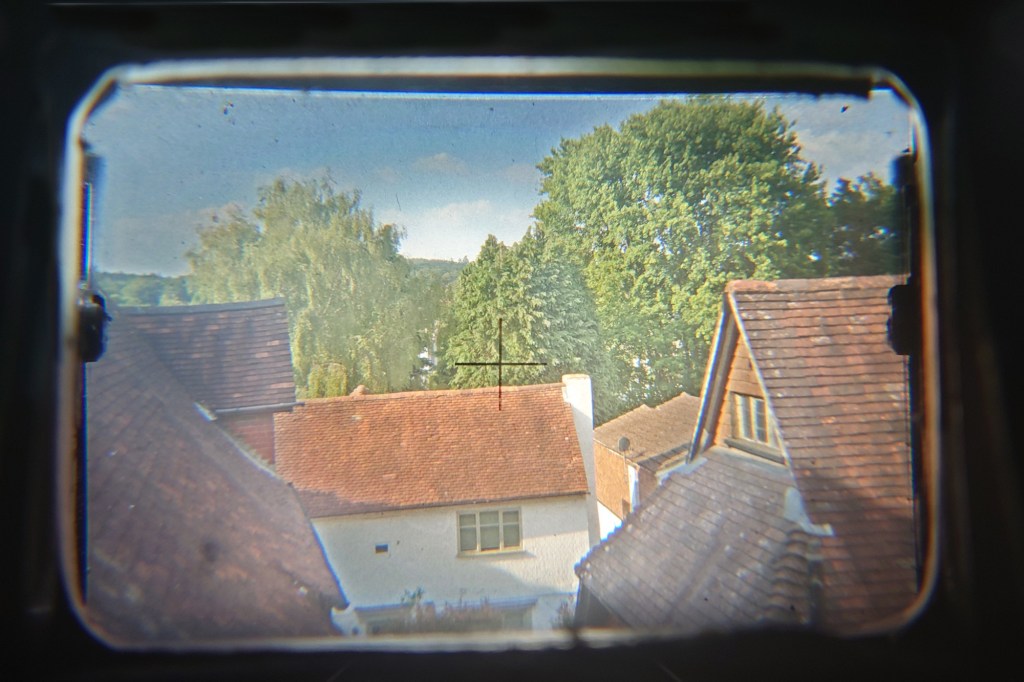
A final view through the Prisma reflex out of my office window and across the rooftops of the ancient houses in my home town. All that remains now is for you to hunt one down and go out and have fun…or wait a while and read why the Second generation might be a better bet to get to grips with.


Leave a Reply