
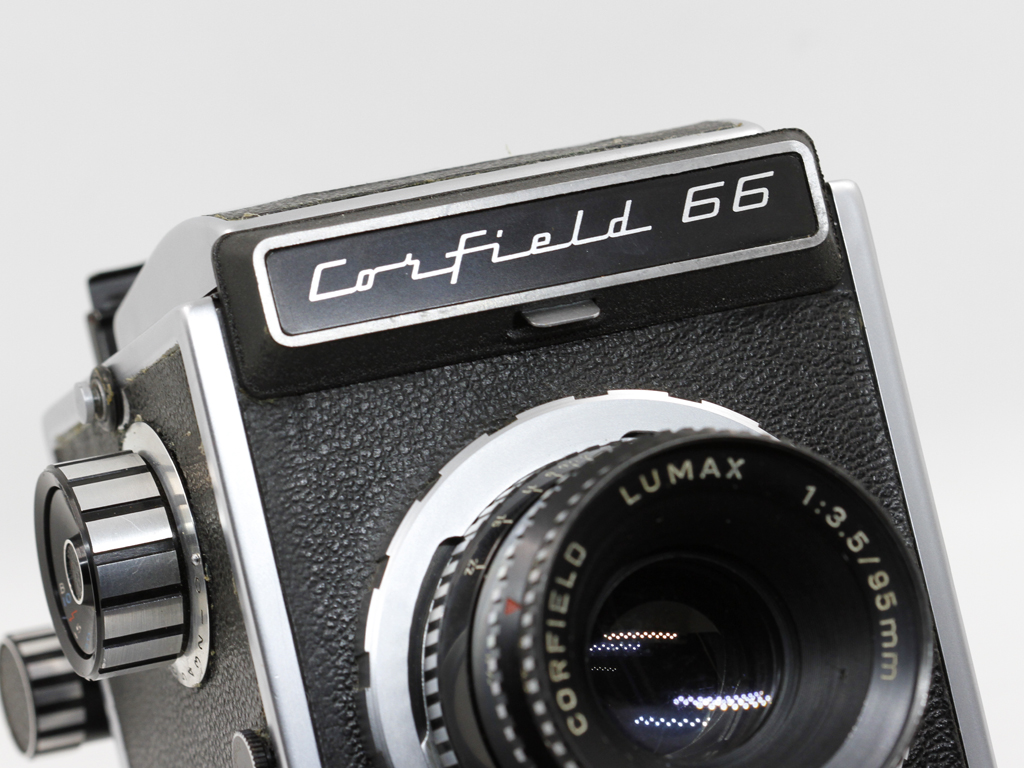
I had to start somewhere, so why not start with a current camera on my bench. The idea of a British 6×6 single lens reflex camera to challenge the dominant German camera industry was bold to say the least, especially in the early 1960’s. In 1961 the Japanese camera onslaught was gathering in the foothills and had not fully started the climb to total dominance. At home in the UK there were many medium format folding cameras of various makes and models, both home grown and European. TLR cameras were also available from the likes of Rollei for those with money, or perhaps a used MPP Microcord or a new Microflex, each a copy of the Rolleicord and Rolleiflex respectively. However these were just about to be phased out as MPP concentrated on their technical cameras instead. The Hasselblad 500c was just about the only player with regards to a truly professional 6×6 SLR system, and out of the reach for most. The only other options were an AGI Agiflex III which was mostly an aesthetic incremental upgrade from the Agiflex I introduced in 1946, itself a close copy externally if not internally of the Reflex Korelle of 1935. The other option was a Bronica Z, D or S if you could find one, Japanese cameras were still being imported under restriction at this point in time. Therefore unless you had a large amount of money at your disposal to purchase a Hasselblad for your hobby, and few did, there was a gap in the market.
Enter Sir Kenneth Corfield of Periflex fame who looked to fill precisely that gap. The Periflex series of cameras had so far been well received and popular with the British photographic public, so trading on this goodwill and loyalty the introduction of a 6×6 SLR should surely succeed ? The Corfield 66 was thus born and introduced in 1961. Unfortunately Corfield as a camera manufacturer was not to last much longer, by late 1962 all camera production had ceased, just one year after the 66 had been released to market. By 1963 Corfield as a camera manufacturer had ceased to exist and the remaining Periflex and 66 cameras were sold at discount through the Dixons and Bennetts chain of stores.
This short lived production run of one year resulted in between 900 and 1000 cameras manufactured, John E Lewis in his authoritative book Corfield Cameras A History and Collectors Guide, ISBN978-0-9561477-0-7 confirms this. Most writers however persist in reporting that less than 300 were made which is incorrect. Known serial numbers that I have confirmed range from AA00037 to AA00984. I personally own 191, 680 and 965 which would seem to support up to 1000 being made. A number of cameras were handed out to the photographic press for review and I would Imagine these were of the lowest serial numbers. It would be nice to locate them and any prototypes that may have been made.
So, what is the camera like? Well, as medium format cameras go, they tend to be heavy, boxy and slower to use, the Corfield 66 fulfilled all these attributes with ease. Weighing in at 1.825Kg, to say the least it was solid, very solid, but also flawed in practical terms making it slower than the competition to use. The design was relatively simple but its execution fit and finish is of a high standard, but not to the elevated level of Hasselblad or Rollei. The camera body itself is rugged and seems to wear well if not the covering. Most bodies are now very often found with the leatherette peeling away unless an attempt has been made to glue it back in place, such as my example in the following images. The shutter if not working is simple to service and repair and get back into working order. Outside of this there is not a great deal that can go wrong as can be ascertained as you read on.
Looking at the camera and starting on the right side, the most obvious feature is the black and silver anodised knob for charging and setting the cloth focal plane shutter and selecting the relevant speed. The vertically running shutter can be set from 1/15th sec through to 1/500th in standard progression and unlike some cameras the shutter speed could be set before or after the shutter was wound on and charged without causing any damage to the mechanism. To charge the shutter the knob is simply rotated until it reaches its stop. To set a shutter speed the knob is pulled out against spring tension, rotated to the required speed and let drop back again. The standard speeds were marked in white, interestingly there are also intermediate shutter speeds available marked in blue of 1/10th, 1/20th, 1/40th and 1/75th sec. Electronic X synchronisation is marked in red at 1/25th sec (I think) with a standard coaxial socket provided and finally a B setting topped off the specification.
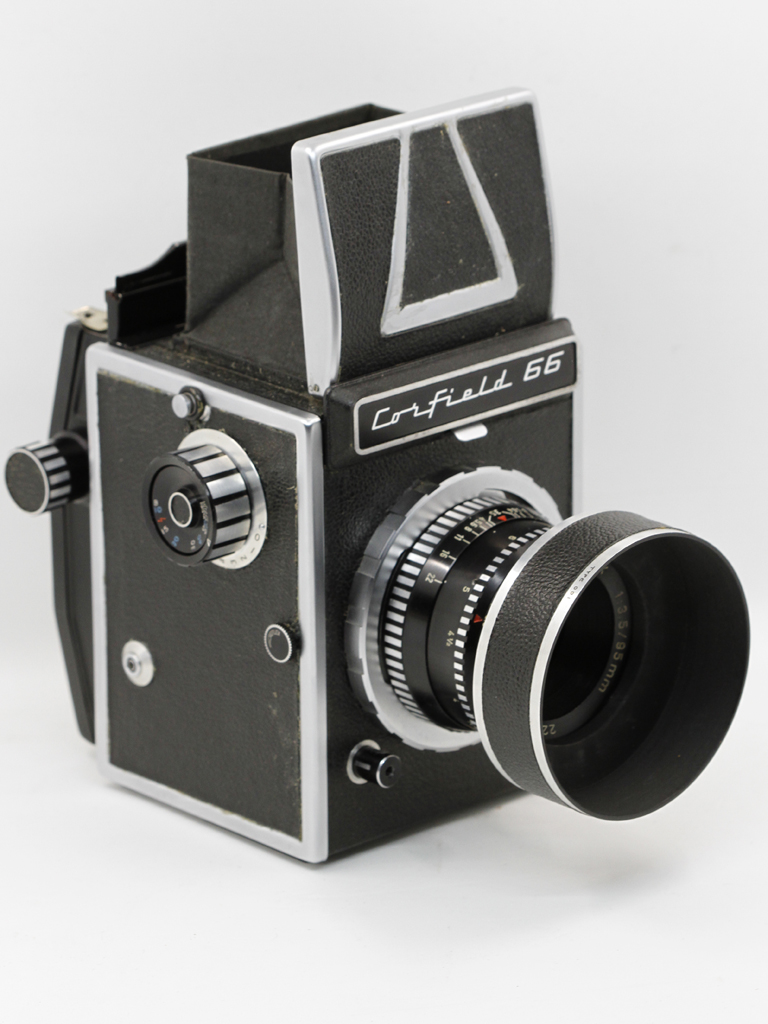
Surrounding the shutter speed knob is a silver dial with numbers engraved in black from 0 to 10. These relate to the flash sync timings for various bulbs for which a card was supplied detailing what setting is required for a particular bulb type. To set, the dial is simply turned to match the number to an arrow on the body. A mirror lock up facility was also provided which could be engaged by first of all pressing the release button to raise the mirror and then rotating the button marked reflex to engage the lock up. Once raised the mirror could be reset without exposure by turning the button in reverse direction.
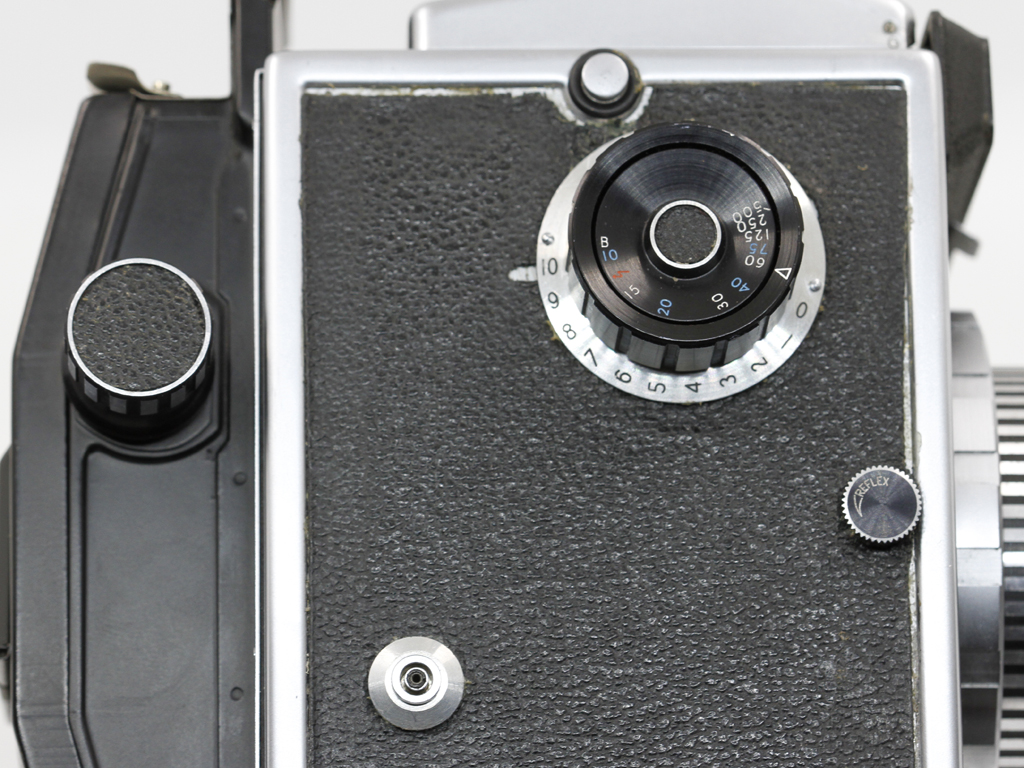
The front of the camera is very plain and the only control is the shutter release button at bottom right as you hold the camera. Anyone who has used a Rollei or Hasselblad will find this familiar and reassuring. The reflex mirror is raised by depressing the shutter release button and the spring tension can be felt increasing until fully raised raised whereupon the shutter will trip, if charged. Keeping the shutter release depressed maintains the mirror in its retracted state until such time as the shutter release is let go allowing the mirror to return for viewing. So, not an instant return mirror but a resetting mirror after an exposure. Incidentally this action of raising the mirror can be performed irrespective of the shutter being wound on. Naturally the front is dominated by the large breech lock lens mount. There are no mechanical couplings to the lens therefore it is simple in form and function and its registration to the film plane is 93mm. The lens is set in place by aligning the mount with a small pin at 12oclock and the breech lock turned until tight. There is nothing more to say other than the axle grease used to damp the screw thread of the mount has long since dried on most cameras making the force need to lock a lens in place or unlock one quite significant. This is a very easy fix though, which I will go though in a later post. The only other item of note is the satin chrome viewfinder release tab at the very top under the nameplate.
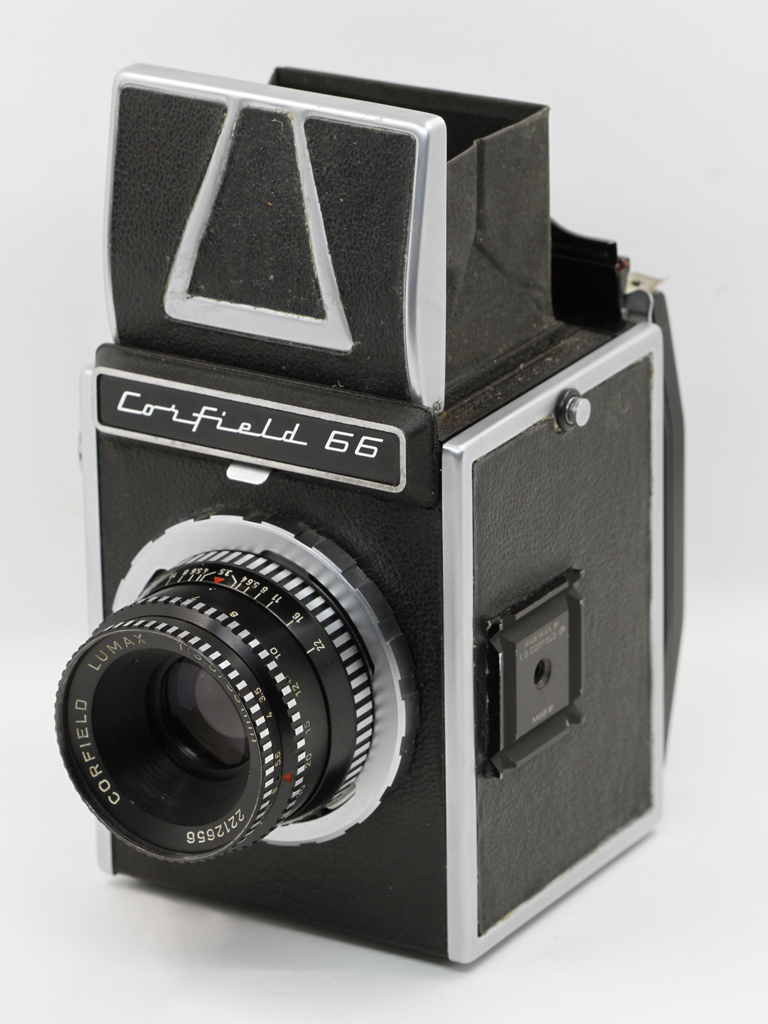
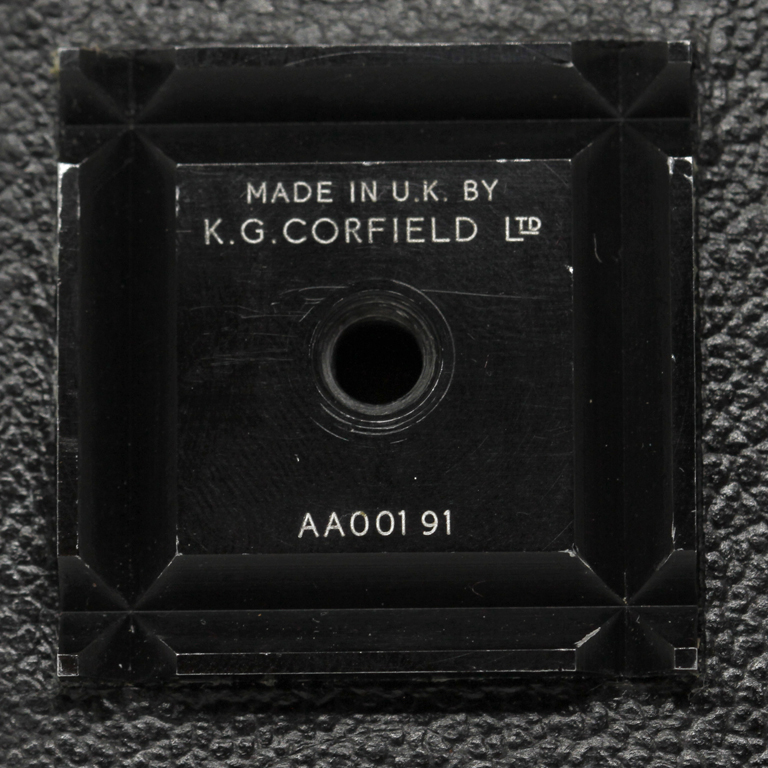
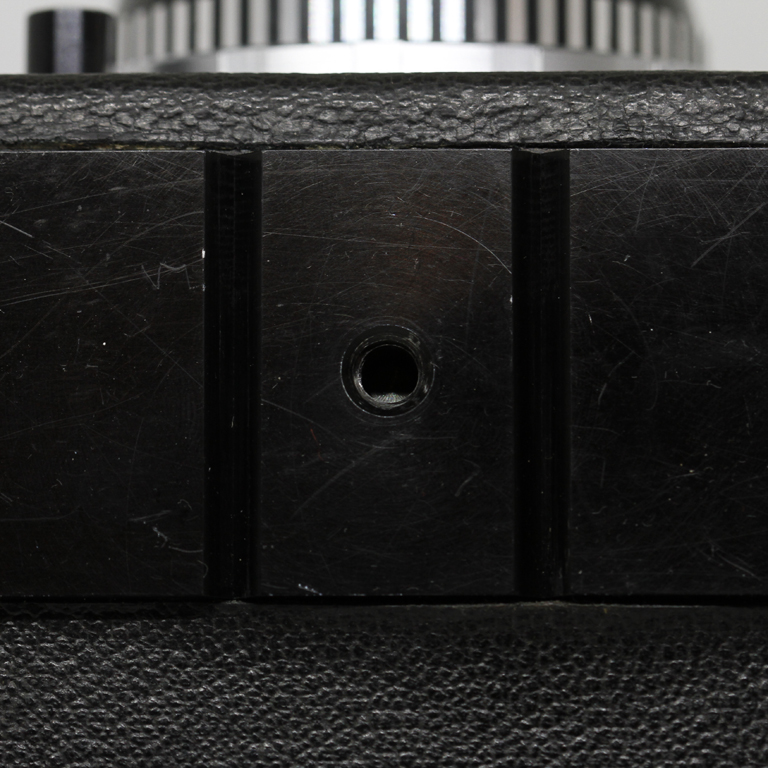
The left hand side of the camera provides the threaded square accessory bracket upon which the serial number is engraved. Thoughtfully it is rebated with a V shaped groove towards its edge on all four sides. This ensures that when the optional accessory handgrip is attached a raised metal bar engages in the groove ensuring it does not slip or rotate and unscrew itself, clever forward thinking by Corfield. This optional hand grip is now very scarce and difficult to come by, I am still searching for one. The base of the camera, normally the most boring part to look at mimics the side accessory mount and also has large V grooves running either side of the tripod socket from front to rear. Was a tripod mount or head on the design table? There is no other reason for such machining.
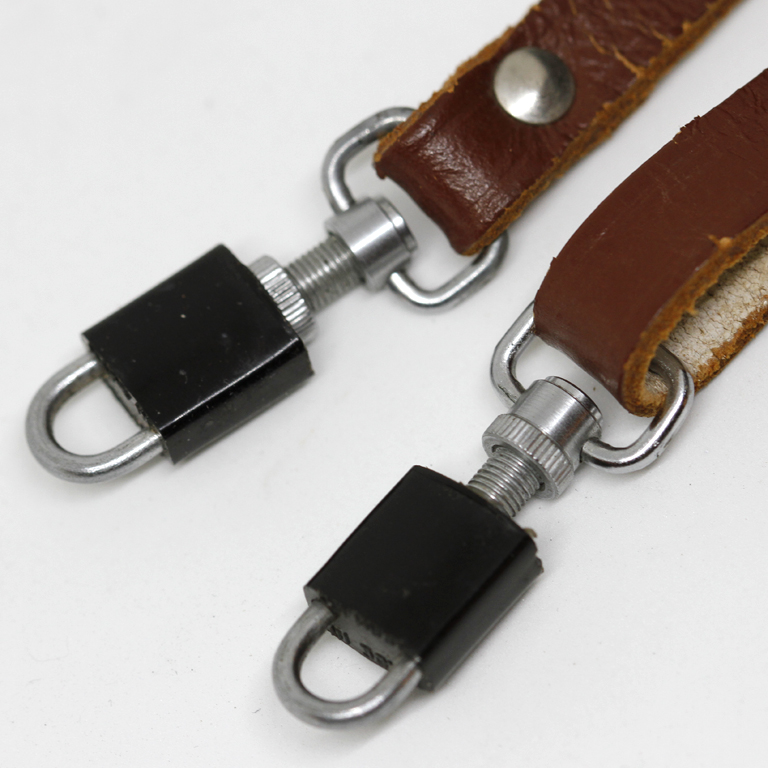
The only other point to note is the proprietary strap lug at the very top of the body and mirrored on the right hand side of the camera, this requires the original strap to be utilised or one for a Hasselblad which seems to work quite well. The original is very secure in that a thumbscrew needs to be screwed all the way back to allow the black plastic cover to be pulled back against spring pressure. This allows the metal loop to fit over the strap button on the camera. The plastic cover then springs back and is doubly secured by screwing down the fore mentioned thumbscrew.
The focussing hood conforms to what most would expect, until it opens. Instead of metal you are greeted with a rubberised cloth hood which conveniently covers the viewfinder magnifier the moment the hood is opened, after which you then have to go digging for it by folding the hood half way back in again. The hood can be released by pushing down on the aforementioned tab under the name plate revealing the ground glass screen held in place by spring clips to either side. On one of my examples a fresnel screen is also fitted which improves viewing clarity immensely. However this may be an aftermarket adaptation and has not been noted on other examples, I would love to know otherwise.
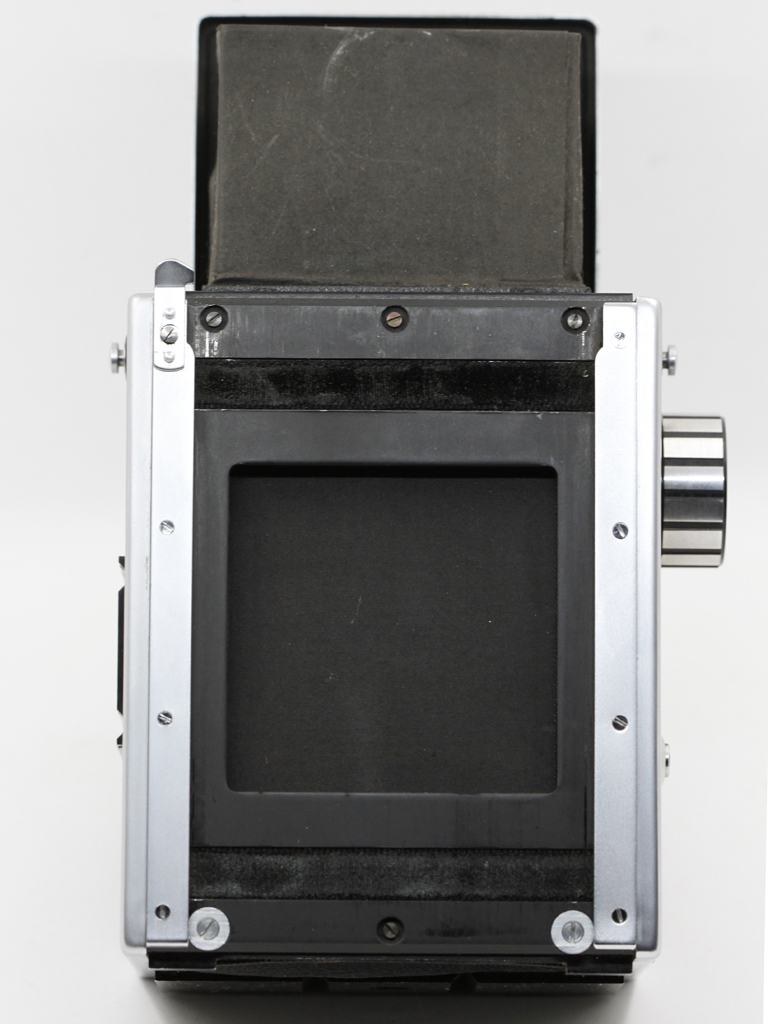
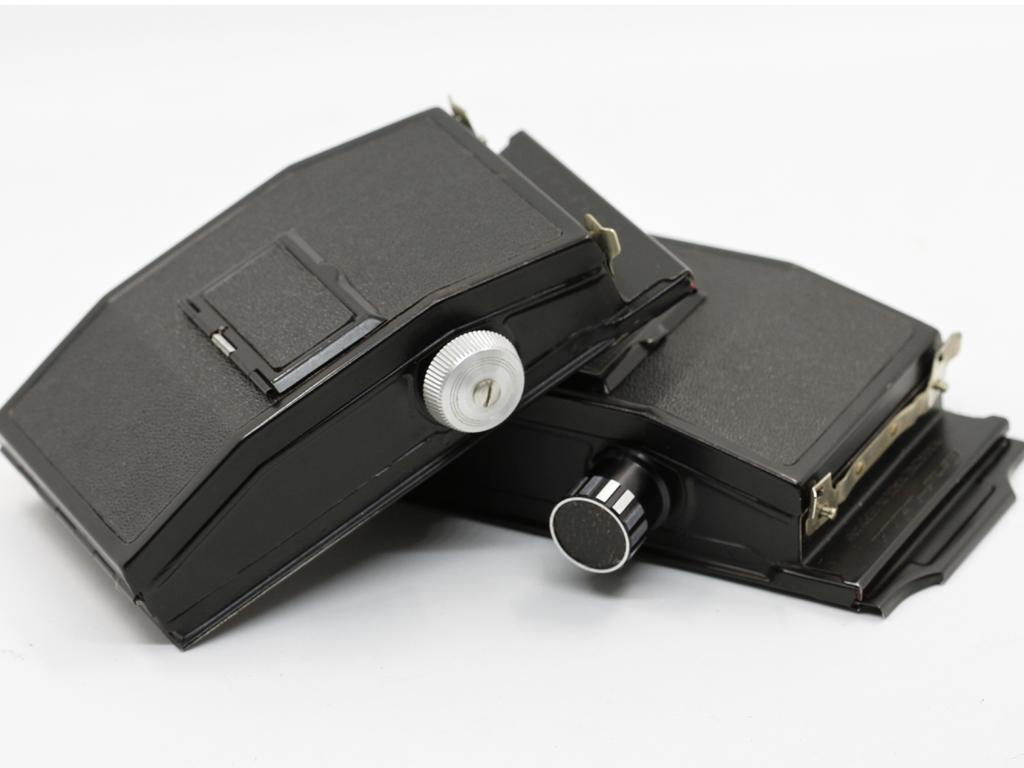
The rear of the camera is where it can be seen that the buying in of the German made RADA film back dictated the cameras overall upright dimensions. The back slips into place in precise chromed channels and is held in position by a spring clip on the top left. Single plate backs and cut film holders therefore could also be used for just the odd exposure or for a special film emulsion. The use of such a back also meant there was no automatic film wind linked to the setting of the shutter, accidental double exposure be it intentional or otherwise was by default very easy to accomplish. I did mention the body was simple in design! Early backs supplied from the German factory had the standard nickel milled wind on knob, later on this was replaced by Corfield by a black and silver anodised knob in keeping with the camera and house style. Both are marked Corfield and made in Germany at the top where the darkslide is inserted
If the above slow method of working has not put you off we move to the main limiting factor of this camera, the lens, the only lens. It is fair to say that at the point of design additional lenses other than the 95mm f3.5 Lumax were sure to have been envisaged, after all the 66 was designed to be modular. Alas only the one standard lens was designed and made by Enna Munchen, no wideangles and no telephotos were forthcoming. It is also odd that the 95mm focal length was chosen for a 6×6 format camera, as this focal length is often the preserve of the 6×7 format, a 75mm or 80mm would normally be expected. The Lumax itself is nicely made and again follows the black and silver Zebra anodising, which by then was the house style and copied by many other manufacturers. The mount as noted is a proprietary breech lock of large diameter and no other camera utilised it. Focussing is achieved by a single helical thread down to a minimum distance of 4ft. The aperture setting ring is conveniently situated at the front of the lens, but as the whole front barrel rotates when focussed due to the single helical, two sets of aperture engravings are therefore present to ensure that at least some of the information is still seen by the photographer as the rest disappears from view. The aperture range is nicely click stopped though from f3.5 to f22 and is formed by a 10 blade manual iris, not even a pre set option here. Again in action this slows down the use of the camera as viewing and composition are performed at full aperture before the lens is manually stopped down for the final exposure, whilst hoping that you didn’t shift focus at the same time. Annoyingly for an OCD pedant like me, the maximum aperture setting does not align with the red focus point triangle when the lens is at infinity and only does so when set at 20 feet.
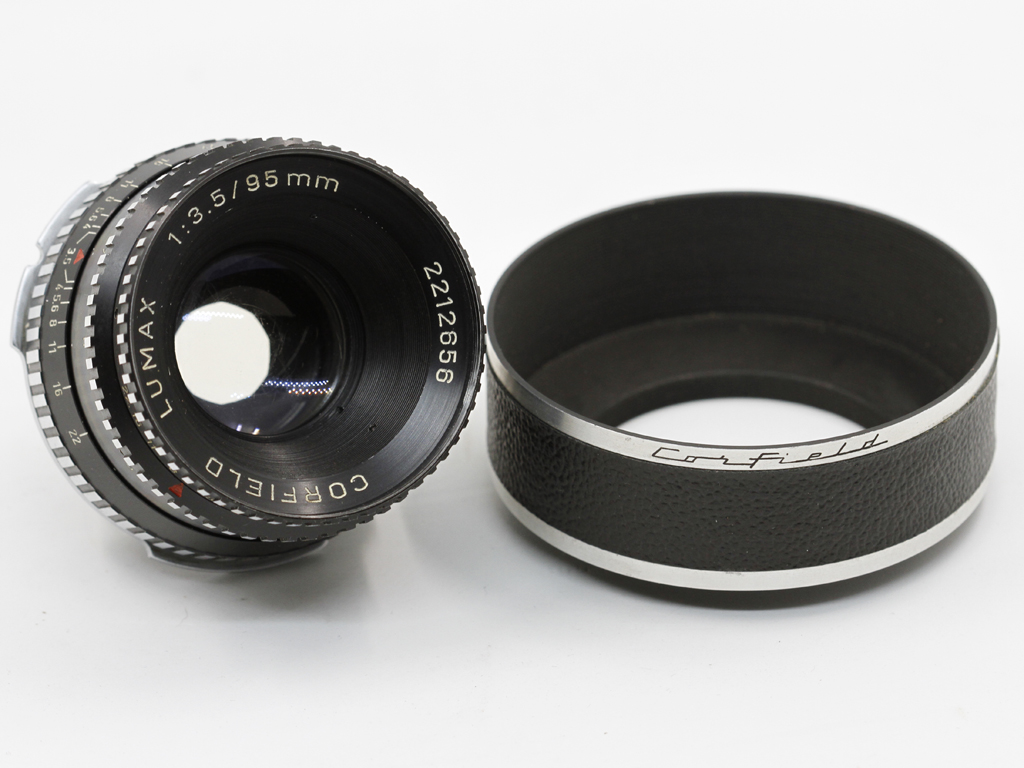
So how good is this single lens? That’s a good question as we now get to the main problematic issue with this camera model. The 95mm Lumax optical configuration is that of a Tessar, four elements with an air spaced front pair and cemented rear doublet, therefore no problems at all with the Tessar design. At the time of manufacture Enna were very active in using high refraction rare earth elements in their lens construction as were most optical houses, and by all accounts this is an exceptional lens. Information other than that is as good as non existent, there is plenty relating to Enna’s other offerings for 35mm cameras but the 95mm Tessar type Lumax is not represented. The problem is that the glass on these lenses seems to suffer badly with fungus. Haze is common and only increases the likelihood of severe fungus damage to the internal surfaces of the front elements, whereas the rear lens elements seem to be far less affected. The soft Lanthanum glass used for the front element (thats a guess) whilst deeply recessed is also very susceptible to damage from over exuberant lens cleaning, and the coating easily damaged. In all, It has taken me many years to find a relatively clean example that doesn’t work as an unintentional soft focus lens. As camera AA000191 sits on my bench nearing completion from a full service, and a half decent lens is now in my possession I will post some examples in due course, and photographs taken with this camera and lens will appear in the gallery.
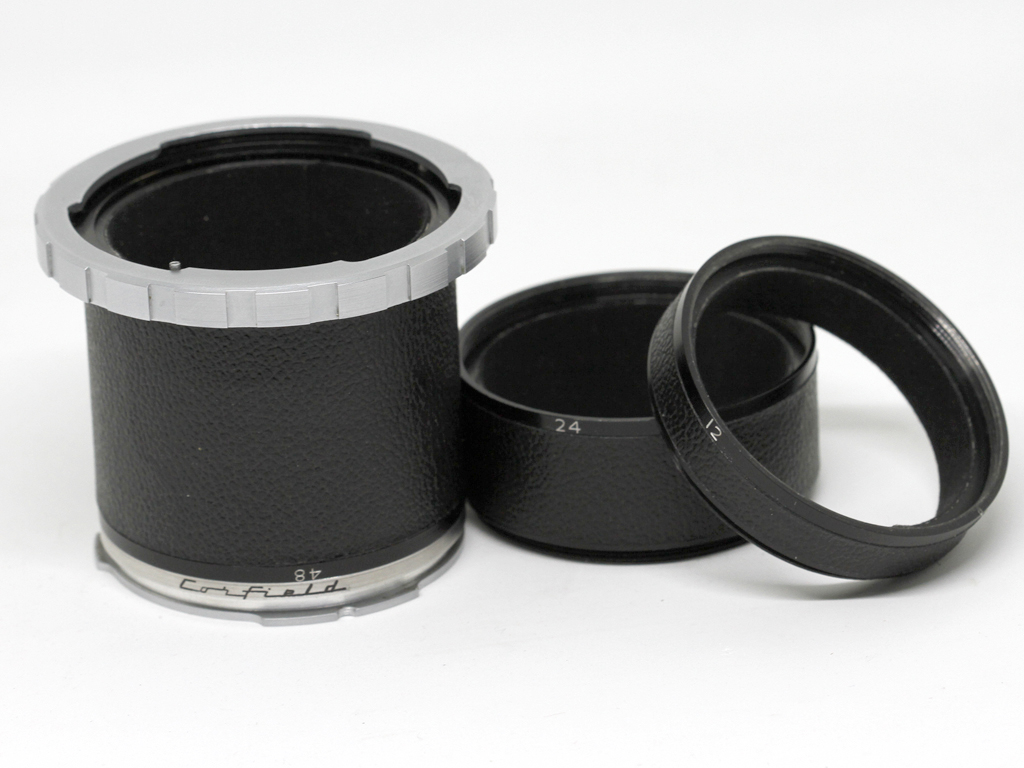
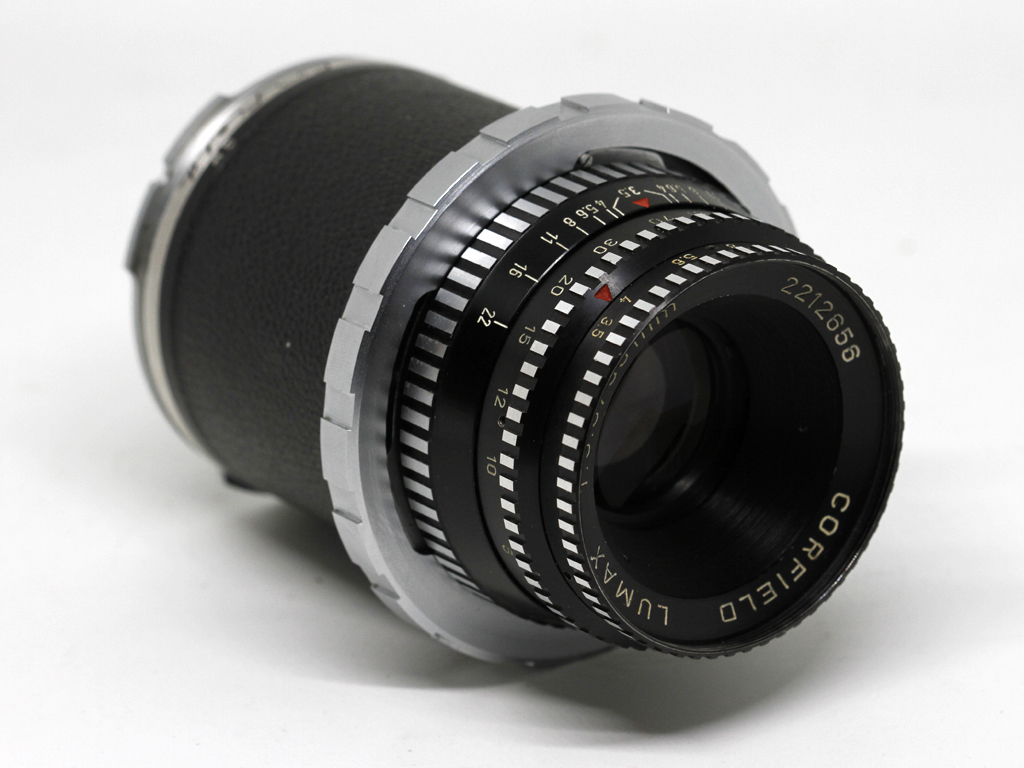
Accessories are limited to a fairly standard lens hood, the aforementioned rare handgrip and a set of extension tubes along with filters. The extension tubes seem easier to come by than the handgrip and quite well made to say the least. These take the form of three screw mounted tubes of 12, 24 and 48mm finished in black and matching leatherette trim to the camera. In use they are screwed in between two adapters, one is the bayonet tube to attach an extension tube to the camera, and the other is a flange tube (breech lock ring) to allow the lens to be mounted to the extension tube. Incidentally the two adapter rings can also be joined without a tube forming a 12mm extension tube. Again the fit and finish is to a very high standard. The only caveat being the flange tube often needs quite a bit of torque to clamp a lens due to dried grease, as said before though, a very easy fix.
It has been mentioned by other authors that the camera was designed to allow accessories from other brands to be used. Having owned many medium format cameras and I still do, I can quite honestly say that nothing I have come across fits the Corfield 66 other than Corfield 66 accessories, the Hasselblad strap being the one exception so far.
Bearing in mind the limited numbers of cameras manufactured and the fact that the lenses do not seem to last the test of time, it could well be true that less than 300 Corfield 66’s are still useable from a stock of near 1000. Outside of this, the camera is eminently useable and certainly attracts attention from people keen to find out what the lump is on top of a tripod and why anyone would want to use it. Especially when you could have an all singing and dancing plastic fantastic, or better still a cameraphone which probably would be singing and connected to the interweb! The fact is, the Corfield 66 is rare and unusual enough to persue the pleasure of using this flawed but unique camera from times gone on that basis alone. Its rarity is not just in the limited numbers produced but also by being a British designed and built 6×6 SLR and not a close copy of a much older design from abroad. A last Hoorah indeed.
Be sure to check back as this sites expands and I post photographic examples from these treasures of times gone by.


Leave a Reply